
Sure! Here’s the translation:
—
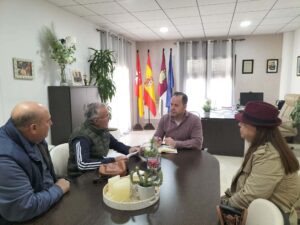
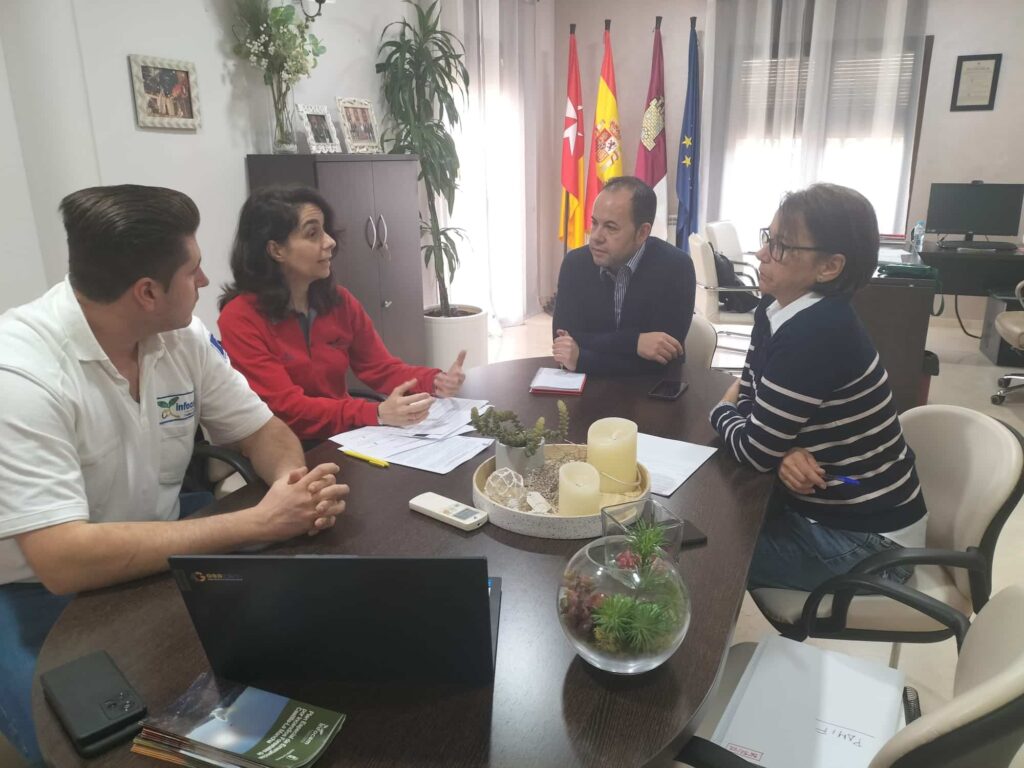
Herencia (Ciudad Real) has taken a decisive step to enhance its preparedness against the risk of wildfires. The mayor, Sergio García-Navas, and the municipal architect, Adoración Gallego, held a working meeting with representatives from GEACAM and INFOCAM as part of the advisory process for developing the Municipal Action Plan against Wildfires (PAMIF). The objective is clear: organize the municipal response in high-risk scenarios, define who does what, with what means, and how resources are coordinated to protect the population and the environment.
A plan to move from improvisation to procedure
The PAMIF is the roadmap that allows the City Council to act in a coordinated, agile, and effective manner when a forest emergency is declared. It is not just a technical document; it is the operational framework that includes protocols, organizational charts, available resources, evacuation routes, meeting points, communication with 112, and intervention criteria in the urban-forest interface—that sensitive zone where housing, facilities, and plant life coexist.
With the guidance of GEACAM and INFOCAM, the plan will establish:
- Command structure and coordination. What responsibilities are assumed by the Mayor’s office, municipal technical services, Local Police, Civil Protection, and maintenance personnel when the risk increases or the emergency is active.
- Mapping and operational sectors. Delimitation of priority areas, access, roads and paths, hydrants, water points, and strategic defense zones.
- Warning and evacuation procedures. How to alert the population (announcements, municipal networks, loudspeakers, messaging), how to prioritize vulnerable groups, and what routes and meeting points will be used if evacuation is necessary.
- Human and material resources. Updated inventory of vehicles, tools, personal protective equipment (PPE), water tanks, pump units, and trained personnel, as well as the reinforcement scheme with the regional device.
- Activation phases and thresholds. What measures are taken in pre-emergency (enhanced surveillance, temporary bans, preventive cleaning) and what changes when an emergency is declared (access closures, security perimeters, coordination with ground and aerial resources).
Preparing before it happens
The meeting with GEACAM and INFOCAM focuses on prior work: prevention, training, and drills. The City Council has already activated technical work to ensure that the PAMIF complies with current regulations and is aligned with the regional device. This alignment is crucial: in an emergency, time is measured in minutes, and it can only be gained if everyone shares language, maps, and procedures.
In addition to planning, the plan will promote preventive actions regularly scheduled in the local calendar: review of perimeter strips, cleaning of ditches and roads, maintenance of hydrants and water tanks, and campaigns for citizen awareness on fire use, agricultural burns, or management of plant waste. Safety often begins before the smoke appears.
Urban-forest interface: the first line of defense
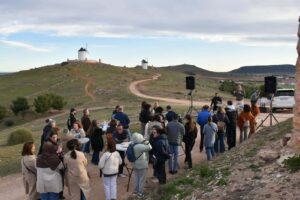
Herencia coexists with cultivated areas, trees, and shrubs in the vicinity of the urban core and various facilities. The PAMIF will identify those critical points of the urban-forest interface—developments, warehouses, facilities, and recreational areas close to vegetation—to prioritize self-protection measures: safety strips, clear access for emergency vehicles, signage, maintenance of plots, and recommendations for landowners and homeowners.
This part of the plan is especially sensitive because, in rapidly evolving fires, the first minutes determine the ability to protect people and to halt the advance toward inhabited areas. Having operational maps and identified water points makes a difference when external resources arrive.
Communication with citizens: clear, verifiable, and timely
Another axis of the document will be public communication. The plan will establish official channels for alerts and updates (municipal website, municipal social networks, announcements, 112), as well as guidelines for fact-checking rumors and organizing mobility during an incident (road closures, alternative routes, temporary restrictions). The goal is to avoid contradictory messages and provide simple and verifiable instructions.
Training and drills: practicing what has been written
Paper without practice does not extinguish fires. Therefore, the implementation of the PAMIF will include training for municipal staff and periodic drills in realistic scenarios: small outbreaks in ditches, fire spots near facilities, preventive evacuation of a sector, etc. These exercises allow for adjusting times, detecting bottlenecks, and improving coordination among services.
A collaborative effort
The meeting between the Mayor’s office, technical services, and expert personnel from the regional device confirms an idea: no municipality is alone in such an emergency. The local plan specifies the first response and prepares the ground for seamless integration with regional and state resources when the situation demands it. The desired outcome is to reduce damage, protect people, and accelerate the return to normality.
The City Council emphasizes that the PAMIF will be a living document: it will be updated with new infrastructures, urban changes, lessons learned from drills, and technical recommendations. Effective prevention is not a snapshot; it is a continuous task.
What can citizens do right now?
Although the plan details institutional obligations and protocols, self-protection is crucial. Some general recommendations that are typically included in these plans—and that help in any municipality—are:
- Keep plots and access clear of dry brush and debris.
- Respect fire use bans and alert 112 at any sight of smoke.
- Prepare a basic kit (documents, medications, flashlight, water) and know the meeting points that the City Council will indicate for each area.
- Avoid blocking roads with vehicles when firefighting operations are underway.
- Follow only official instructions.
The underlying message is simple: preparing today reduces risks tomorrow.
Frequently Asked Questions (FAQ)
What is the PAMIF and what is its purpose in a municipality like Herencia?
The Municipal Action Plan against Wildfires (PAMIF) organizes the local response to such emergencies: it defines responsibilities, resources, alert and evacuation protocols, and coordination with 112, GEACAM, and INFOCAM to act quickly and safely.
What is the difference between GEACAM and INFOCAM and how do they relate to the City Council?
GEACAM is the public environmental management company of Castilla-La Mancha; INFOCAM is the regional device for fire prevention and extinguishing. Both advise and coordinate with the City Council to align the local PAMIF with regional procedures.
What measures does the plan include for the urban-forest interface of Herencia?
The planning identifies sensitive areas near vegetation (housing, warehouses, facilities), establishes protection strips, reviews hydrants and water points, defines access for emergencies, and sets evacuation routes and meeting points.
How can citizens prepare for a nearby wildfire?
By keeping plots and access clean, respecting fire use bans, calling 112 in case of smoke or flames, knowing the meeting points indicated by the City Council, and following only official alerts to avoid risks and congestion.
—
If you need any modifications or further assistance, feel free to ask!
Spanish post in Herencia avanza su Plan de Actuación Municipal frente a Incendios Forestales para responder con rapidez y coordinación