
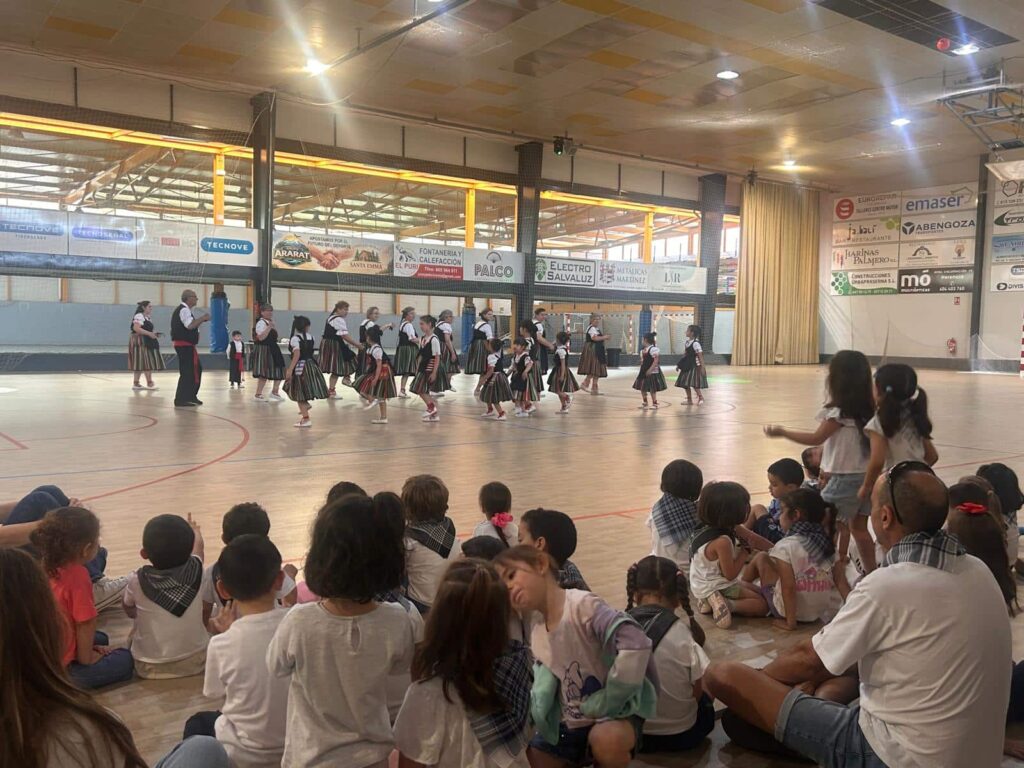
The CEIP Carrasco Alcalde in Herencia has launched the first edition of the Fitur Herenciano, an educational initiative that has transformed the school into a small fair dedicated to the culture, history, and traditions of the municipality. This event coincided with the Day of Castilla-La Mancha celebration, allowing students to showcase the work they have done over the past few weeks related to local heritage.
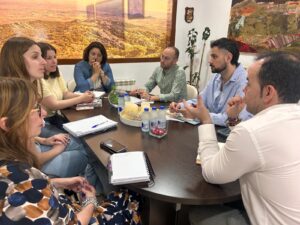
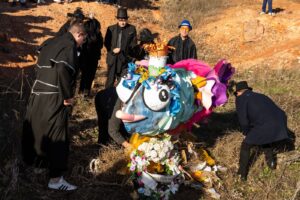
The opening ceremony featured the participation of the municipal government and the mini municipal corporation, who joined the school community in launching this space filled with workshops, exhibitions, and technology. The fair presents Herencia’s identity through the eyes of the youngest, with themed stands dedicated to gastronomy, Carnival, and some of the town’s most iconic monuments.
A school fair to explore Herencia from within
The Fitur Herenciano originated as an educational project where students not only present content but also research, create, and explain aspects of their immediate surroundings. Under the guidance of their teachers, they have worked on various elements of Herencia’s history, culture, and traditions to create an open, visual, and interactive exhibition.
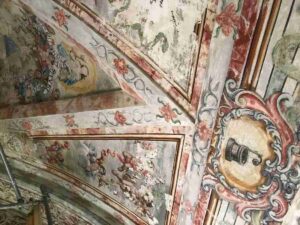
The stands have provided insights into different aspects of local identity. Gastronomy, festivals, monumental heritage, and the cultural life of the municipality served as a thread that ties together this hands-on learning activity. The fair thus acts as an expanded classroom where knowledge moves from textbooks to models, presentations, digital resources, and interactive spaces.
Among the highlights is a street map featuring 3D models of monuments, showcasing the use of technology within the project. This component combines creativity, spatial learning, and knowledge of heritage, allowing students to represent recognizable locations in Herencia using their own hands and digital tools.
School radio, photo booth, and inclusion
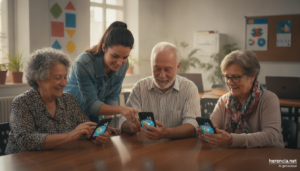
The initiative also included a school radio, demonstrating the dynamic nature of the project. Through this platform, students can develop their oral expression, communication skills, listening, and the ability to share what they have learned with classmates, families, and visitors.
During the event, Mayor Sergio García-Navas and local councilors also participated in a themed photo booth, one of the spaces set up for the fair. These elements help make the activity more engaging and enhance the participatory dimension of the project, where children are the main characters of both the content and the experience.
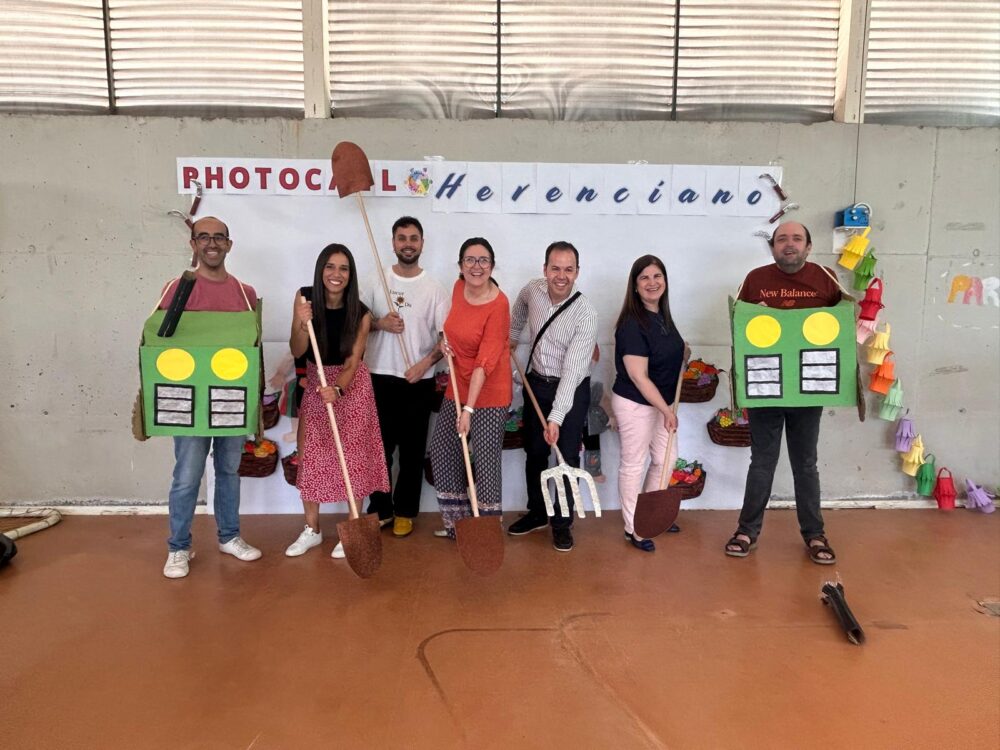
The Fitur Herenciano also received support from the Occupational Center “El Picazuelo,” which had its own stand at the fair. Its participation reinforces the inclusive nature of the initiative and broadens the community aspect of the project, integrating various groups into a single cultural and educational activity.
The involvement of the Occupational Center adds significant value, connecting school learning with the social realities of the municipality. Local culture thus becomes a shared space where different people and entities can contribute, share, and feel part of the same celebration.
Learning local culture to preserve it
The Herencia City Council congratulated the educational community for launching an initiative that combines learning, tradition, and innovation. This project allows younger generations to better understand their town, appreciate the value of its festivals and monuments, and learn to communicate about them in a creative way.
Heritage education is particularly important in municipalities like Herencia. Understanding the local environment helps strengthen the connection with the community and value what belongs to the collective memory. When children investigate their town, ask questions, create models, or explain traditions, they don’t just learn content; they also partake in transmitting a shared identity.
The first Fitur Herenciano leaves a positive image of collaboration among the school, the City Council, the mini municipal corporation, and participating entities. The fair demonstrates that local culture can be taught through creativity and that classrooms are also spaces where heritage is nurtured.
The initiative aims to bring Herencia closer to its own students, with the potential to engage the entire educational community. The outcome is an original, relatable, and enriching exhibition where students have shown that understanding their municipal roots can also be a way to envision their future.
Frequently Asked Questions
What is the Fitur Herenciano at CEIP Carrasco Alcalde?
It is a school fair dedicated to the culture, history, and traditions of Herencia, featuring workshops, exhibitions, technology, and themed stands created by the students.
What topics were covered in this first edition?
Students prepared spaces on gastronomy, Carnival, monuments, and local heritage, along with resources like a street map with 3D elements, school radio, and a themed photo booth.
Who participated in this initiative?
The event involved the local government team, the mini municipal corporation, the educational community of CEIP Carrasco Alcalde, and the Occupational Center “El Picazuelo.”
Spanish post in El CEIP Carrasco Alcalde inaugura el primer Fitur Herenciano